
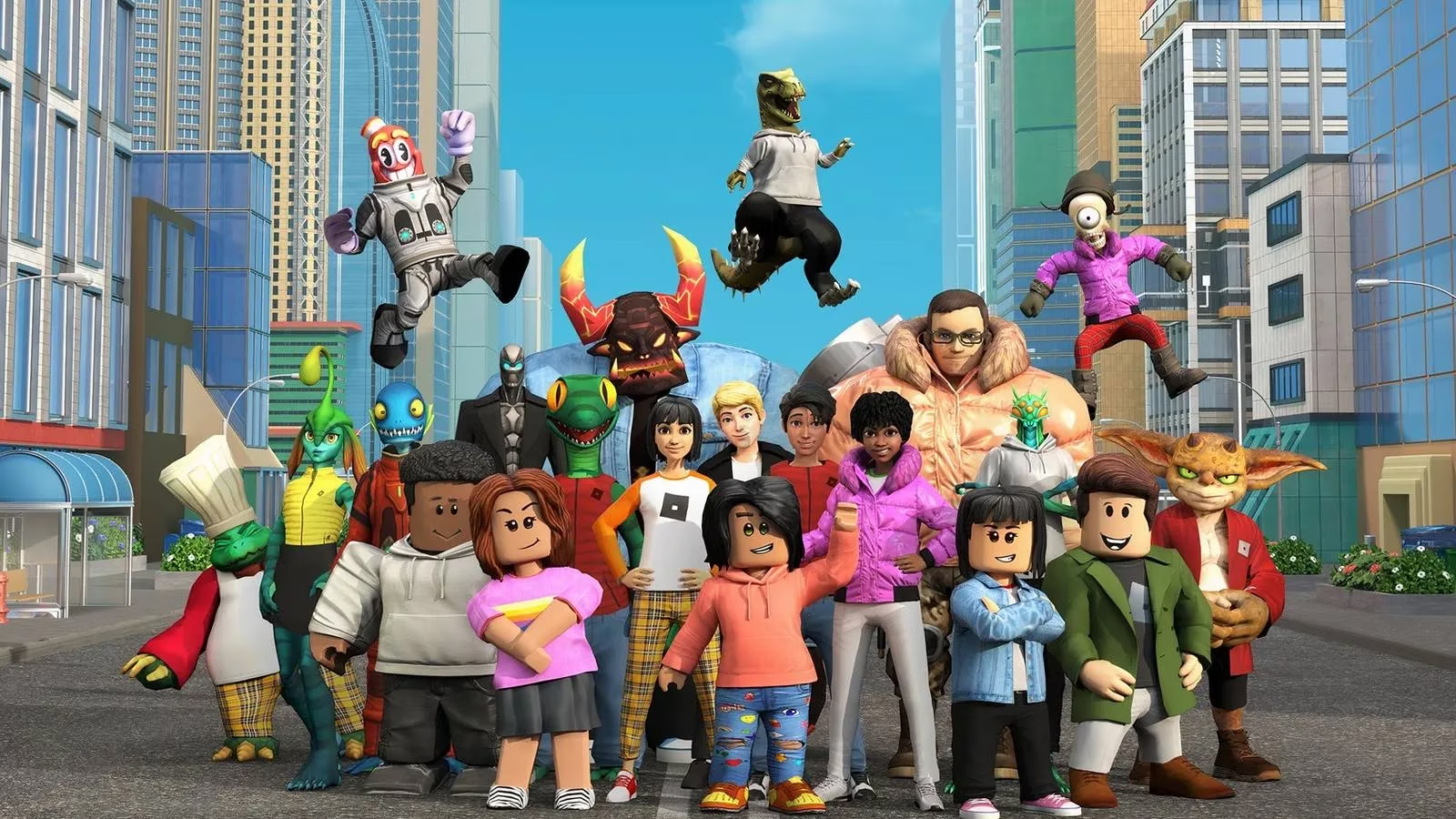
Like millions of others, I’ve spent countless evenings jumping between obbys, tycoon games, and roleplay servers on Roblox. The platform’s endless creativity always felt like a pixelated playground, a space where imagination takes physical form. Yet, as 2026 unfolds, I still find myself grappling with the dark cloud that descended in August 2025, when the Louisiana Attorney General’s lawsuit brought uncomfortable questions to the surface. Even now, the echoes of that legal shockwave linger in every parental chat and gaming forum I visit.
I remember exactly where I was when the news broke—scrolling through my feed late at night, seeing headlines that mixed the whimsical Roblox logo with words like “lawsuit” and “child exploitation.” The accusation was brutal: the platform had failed to erect robust safety barriers, leaving underage users exposed to harmful activities. My immediate thought skipped to the younger players I’d encountered in Adopt Me! or Brookhaven, many of whom can barely type a full sentence. Were they truly protected in this digital sandbox?
Roblox’s official response, which I devoured in one sitting, walked a tightrope. The company invoked its longstanding policy of never commenting on pending litigation, then pivoted to a passionate defense of its safety ecosystem. Reading between the lines, I sensed a team caught off guard but determined. The statement laid out layers of automated chat filters, human moderators, and proactive reporting tools. However, one sentence stuck with me: they acknowledged the possibility that “bad actors” could slip through, and even worse, that these predators might lure children to off-platform spaces where “safety standards and moderation practices may differ.” That admission felt like a cold splash of water—a reminder that no virtual wall is impenetrable.
Around the same time, a bizarre subplot unfolded. Roblox CEO David Baszucki briefly vanished from X, with speculation ranging from a self-imposed break to a technical hiccup. When his account returned, his posts were buried under layers of community notes—crowdsourced fact-checks that linked directly to reports about cease and desist orders. Allegedly, the company had tried to muzzle a content creator and journalist, known simply as Schelp, who was digging into alleged child sex crimes facilitated through the platform. Watching a tech CEO get fact-checked by his own user base was surreal, like seeing the fabric of a carefully curated reputation unravel in real time.
Then came the heavy hitters. Chris Hansen, the journalist synonymous with predator sting operations from his Dateline NBC days, posted a video that instantly went viral within my circle. He announced that he, alongside his TruBlu team and Schelp, had launched a full-blown investigation into Roblox, having already interviewed law enforcement officials and young victims. This wasn’t just a digital drama anymore—it was a full-fledged exposé. Schelp later shared a chilling snippet of an interview with convicted sex offender Lewis Hasty, who matter-of-factly admitted to trading Roblox game currency for child pornography and grooming minors right inside the game’s chat windows. I had to pause the clip. The exact same virtual currency I used to buy cool avatar hats was being weaponized.
The scale of the issue hit me hardest when I revisited the statistics. Roblox’s population has at times eclipsed even Fortnite’s, and an estimated 66% of its users are under 17. That’s a staggering number of impressionable minds navigating a platform with user-generated content that ranges from creative masterpieces to, occasionally, unmonitored nightmares. Roblox emphasized that it cooperates with law enforcement and proactively flags suspicious behavior, but the Schelp situation raises an uncomfortable possibility: is the company more focused on silencing whistleblowers than fixing the vulnerabilities? The law firm backing Schelp stated that after his investigations led to six separate Roblox-related arrests, the cease and desist orders landed. Six arrests don’t feel like a coincidence; they feel like a trail of evidence.
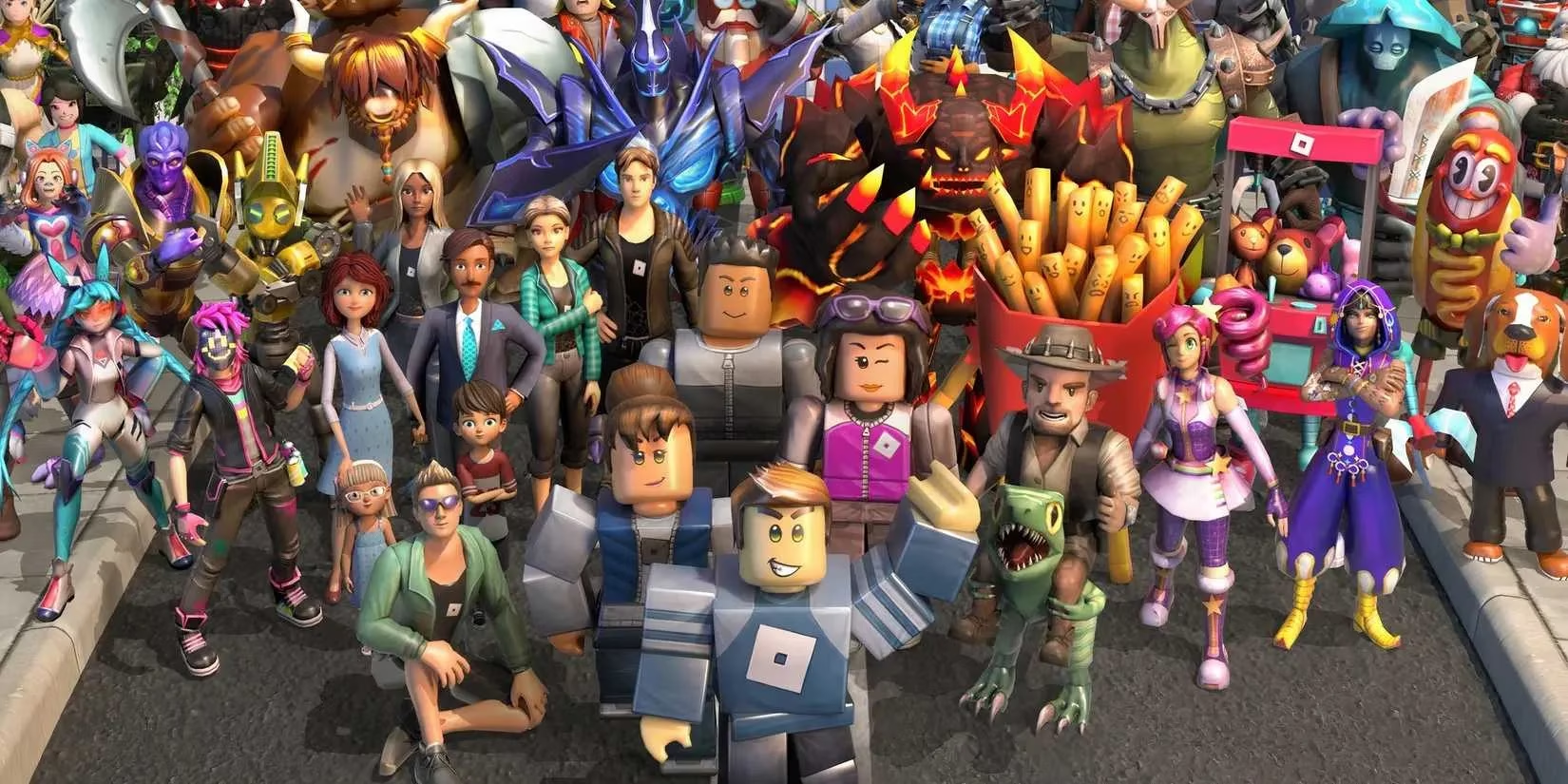
As a lifelong gamer, I’m torn. I’ve seen Roblox evolve from a quirky physics engine into a global phenomenon, and I believe in the good it can do—teaching coding basics, fostering entrepreneurial spirit among young developers, and connecting friends across continents. But the platform’s immense scale makes it a magnet for exploitation, and the tools designed to catch predators seem perpetually one step behind. The phrase “more work to be done” from Roblox’s statement now reads like an understatement rather than a commitment.
In 2026, I still log in, but my eyes are wider. I check privacy settings obsessively, monitor who my younger cousins interact with, and follow every update from Hansen’s team with a knot in my stomach. The lawsuit may have faded from the front page, but for those of us who see virtual worlds as extended neighborhoods, the questions remain: How many warning signs were missed? And when the next scandal surfaces, will Roblox finally trade careful public relations statements for genuine, transparent overhaul? Until then, every “friend request” from a stranger carries a faint shadow—and I never, ever let my guard down.
Comments