
On a warm August evening in Doha, a teenager named Yusuf logged into his computer expecting another night of building obstacle courses and trading digital pets on Roblox. Instead of colorful avatars, the screen showed only a blank error. His phone told a similar story: no network access. Baffled, he checked the Wi-Fi, restarted the router, and tried again. Nothing changed. Across Qatar, thousands of other players were hitting the same wall. The platform that had become a daily ritual for children and teenagers was no longer reaching their devices. Within hours, social media filled with screenshots and rumors, but the underlying truth was hard to accept: Roblox had been completely banned across the entire country.
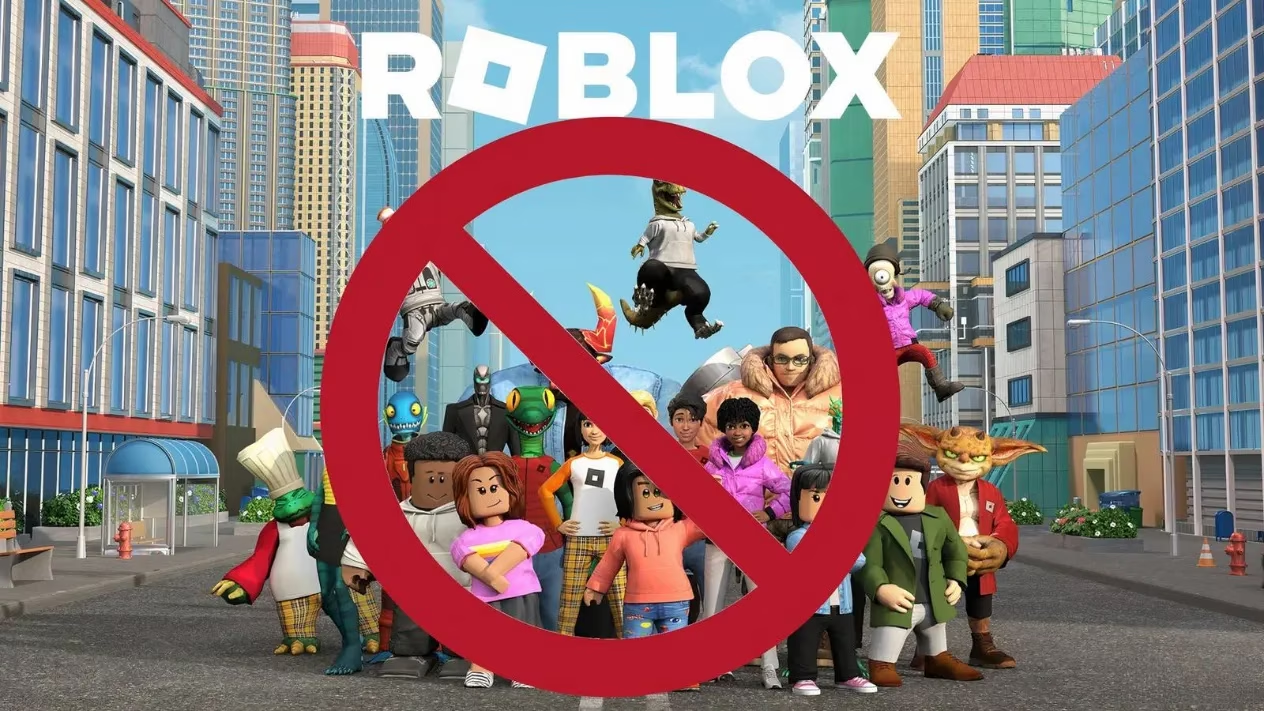
By August 12, 2025, the restriction had quietly taken hold. Some users discovered that the Roblox application could still be downloaded from mobile stores, but launching it produced a cold network error. Others reported that the web client simply refused to load, as if the service had disappeared from the internet. The sudden blackout left players unable to join their favorite experiences, from role-playing worlds and simulators to social hangouts. For many young gamers, the loss was not merely technical; it was social. Virtual birthday parties, school clubs, and friend groups that had migrated onto the platform were suddenly scattered without warning.
Why Did the Ban Happen?
Qatar’s decision did not emerge from nowhere. According to the Qatar Tribune, a sustained social media campaign had urged authorities to prohibit the game, citing what campaigners described as potential risks to children and teenagers. By August 12, 2025, that pressure had turned into an official block. Another publication, Al Jasra, pointed to reported incidents of virtual assaults inside certain user-created Roblox experiences as an additional factor behind the move.
Several key concerns appear to have driven the government’s action:
-
🛡️ Child safety fears, especially the risk of inappropriate contact with strangers
-
⚠️ Reports of virtual assaults in poorly moderated game spaces
-
📢 A loud public campaign demanding stricter digital protection
-
🧩 Perceived gaps in content regulation for user-generated experiences
-
💳 Worries over monetization and uncontrolled in-game spending
The fact that Roblox relies heavily on user-generated content has always been one of its greatest strengths. That same openness, however, can become a liability when moderation falls short. In a country where family and child protection are central social priorities, officials decided the possible dangers outweighed the entertainment value.
A Troubled History of Safety Concerns
Roblox has long enjoyed a reputation as a creative playground, but it has also weathered serious controversies. One of the most alarming cases involved a child who was allegedly kidnapped after meeting a predator on the platform. Investigators said the child believed they were chatting with another teenager, only to discover later that the user was much older. The case sent shockwaves through parenting communities and added weight to arguments that the game needed stronger identity checks and monitoring.
Though Roblox has introduced parental controls, chat filters, and reporting tools over the years, the platform’s enormous scale makes perfect moderation nearly impossible. With an estimated 380 million active monthly users, even a small percentage of harmful interactions can represent a meaningful number of incidents.
Turkey Already Set a Precedent
Qatar is not the first country to sever access to Roblox. In 2024, Turkey blocked the platform as well. Turkish authorities cited a lack of content regulation and concerns about monetization. Roblox responded quickly at the time, saying it would work with Turkish officials to restore access. That precedent gives some hope to players in Qatar. If the company can demonstrate meaningful changes and cooperate with local regulators, a path back to the service may still exist.
| Country | Year | Stated Reasons | Response |
|---|---|---|---|
| 🇹🇷 Turkey | 2024 | Content regulation, monetization concerns | Roblox pledged to work with officials |
| 🇶🇦 Qatar | 2025 | Child safety, virtual assaults, public campaign | Official response still awaited |
A Platform Still Reaching New Heights
Despite these restrictions, Roblox continues to thrive on the global stage. The platform’s audience remains massive, and its most popular experiences can draw staggering numbers. In June 2025, the game Grow a Garden on Roblox soared to an extraordinary 16 million concurrent players. Such figures underline just how deeply embedded Roblox has become in modern digital culture.
For Yusuf and his friends in Doha, however, those global numbers offer little comfort. They continue to search for workarounds, follow news updates, and wait for a sign that the ban could be lifted. Some have shifted to other creative games, but many say the experience is not the same.
What Comes Next?
As of early 2026, Roblox had not issued a detailed public statement outlining a specific timeline for restoring access in Qatar. The company’s silence has left players uncertain. Given the Turkish example, a negotiated return is possible, but it would likely require Roblox to introduce localized safeguards, stricter content controls, or other measures that satisfy Qatari regulators. Until that happens, the virtual doors in Qatar remain closed. The story of Roblox in the country is now one of absence rather than adventure, a reminder that even the most popular digital worlds can be switched off when real-world concerns take priority.
Comments