
Roblox’s unexpectedly popular collecting experience Steal a Brainrot has taken a firm grip on the platform’s social scene throughout 2026. With dozens of uniquely bizarre Brainrots to gather, many of which are incredibly rare spawns, players are constantly looking for ways to complete their collections without waiting centuries for that one coveted unit to roll down the conveyor belt. This is where the underground trading economy comes in—but trading in this game isn’t as simple as hitting a button, and it certainly isn’t safe.
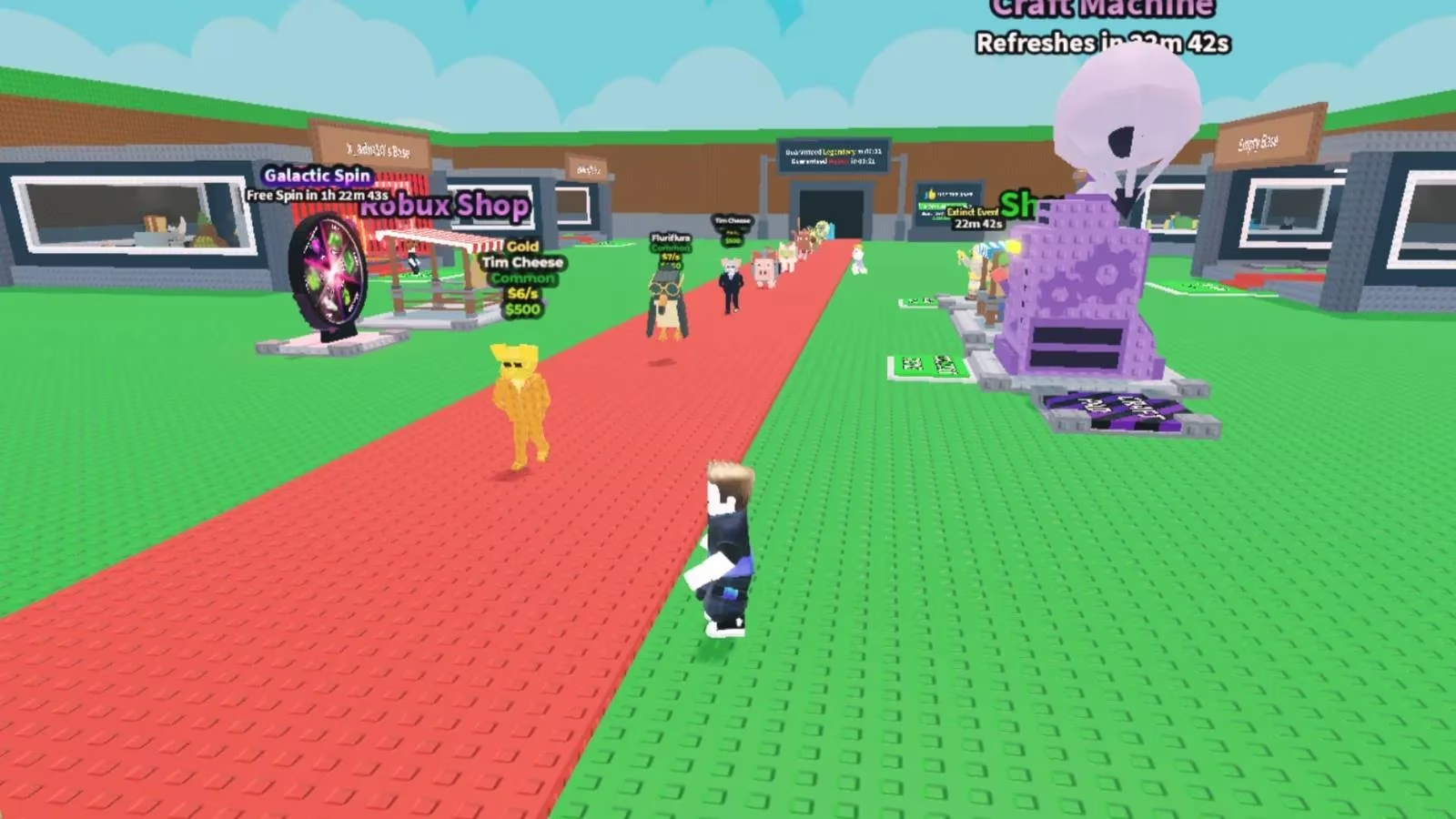
The first thing every new collector must understand is that Steal a Brainrot contains no built-in trading system whatsoever. You cannot approach another player, open a secure trade window, and swap units like you would in most Roblox inventories. Instead, the entire process revolves around the game’s core mechanic: stealing. Players must literally drop their own Brainrots and grab the other person’s haul on a private server, a method that instantly exposes both sides to a mountain of trust issues.
Because the exchange takes place on player-hosted private servers with no official oversight, the risk of scamming is sky-high. A trader could agree to a deal, have you drop your prized Sigma Skibidi or Rizzler first, then snatch it and leave the server before dropping their agreed-upon unit. Or, far worse, an extra player could be hidden in the shadows, ready to steal whatever appears. The game’s developers have repeatedly stated that they are not responsible for any trades gone wrong, leaving all liability in the hands of the users.
Despite these dangers, the community has organically developed a set of unwritten rules to make trading survivable. Following them can dramatically reduce your chances of walking away empty-handed:
-
Use a disposable account. Keep your main collection safe by moving only the specific Brainrots you intend to trade onto an alt account. This way, even if a scam occurs, your primary stash remains untouched.
-
Insist on an empty private server. If the person you’re trading with brings a friend—even just “to watch”—leave immediately. A true 1-on-1 environment is the only acceptable condition.
-
Exchange feedback promptly. After a completed trade, it’s customary to leave a reputation report in the official Discord server. This slow-building trust network is the closest thing to a safety net the game has.
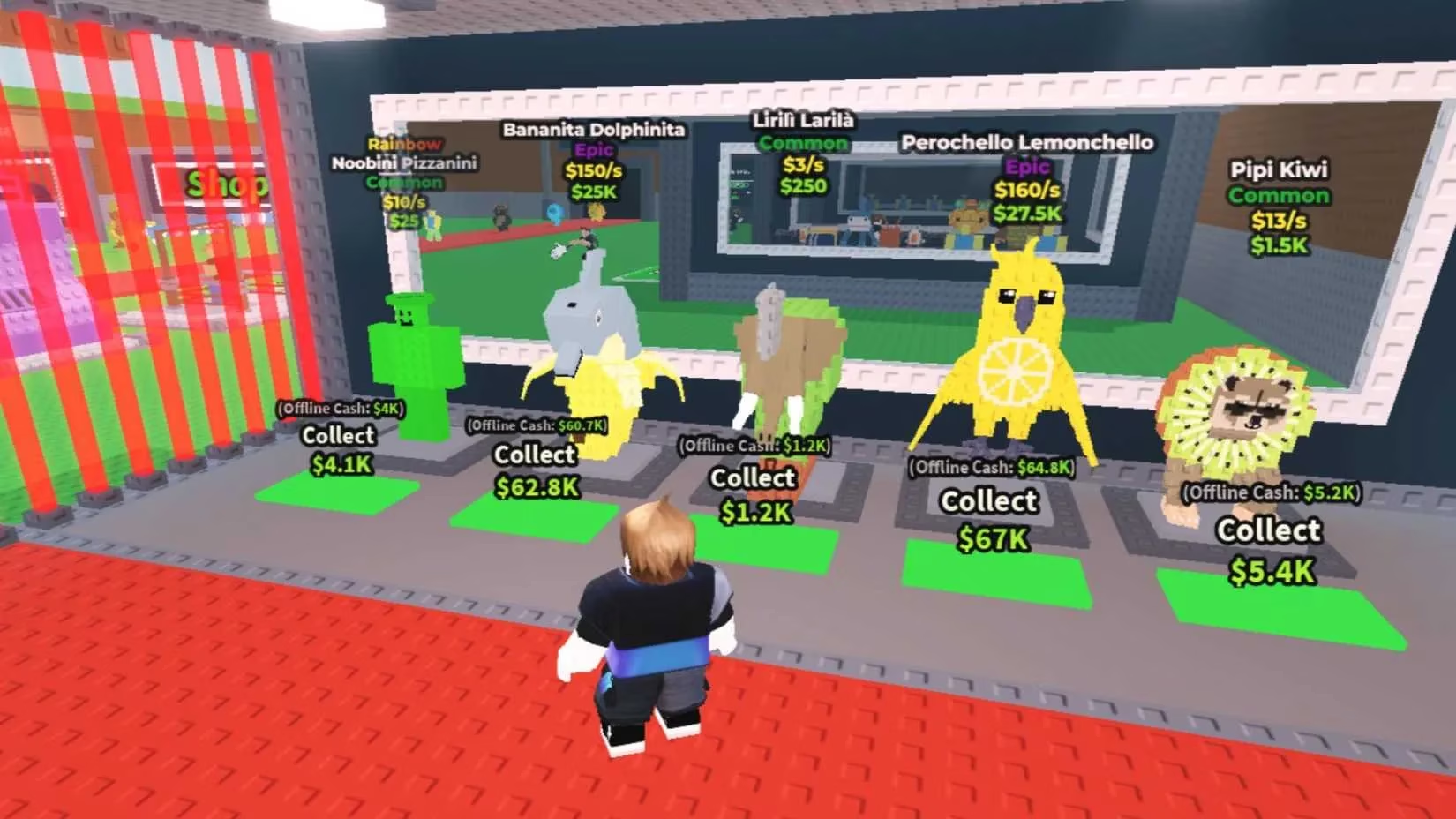
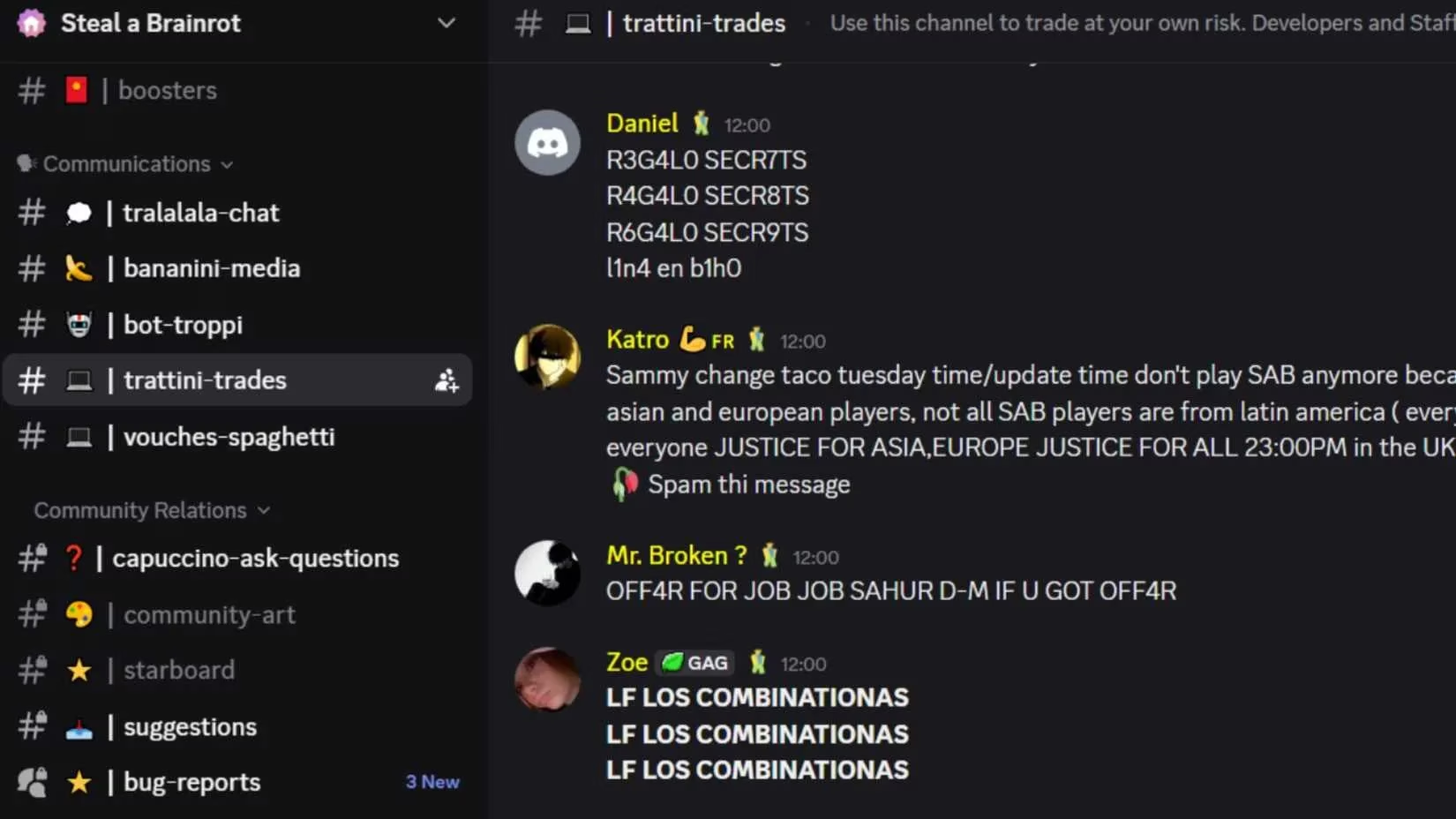
So where do you actually find people willing to barter their rare units? The answer lies entirely outside the Roblox client, on the game’s official Discord server. Inside the server, the channel named Trattini-Trades has become the de facto global marketplace. Every single day, messages flood in offering to swap mythic-tier Brainrots, limiteds that only appeared during a single event in 2025, or purely cosmetic variants that hold immense sentimental value among collectors.
Entering this channel feels like stepping into a loud bazaar. You’ll see players posting images of their inventory, writing out wishlists, and using community-created value lists to assess fairness. Some trades are straightforward one-to-one swaps, while others involve multi-brainrot packages or even Robux payments on the side—though real-money transactions carry even greater risks and are technically against Roblox’s terms of service.
However, the Trattini-Trades channel is no safe haven. Even though it sits inside the official Discord, the developers have made it painfully clear that they do not moderate trades. The channel exists purely as a common ground; what happens between two consenting users is their own affair. As a result, instances of middleman scams (where a supposed “trusted trader” acts as an escrow and then vanishes) and fake reputation vouches have become alarmingly common in the first quarter of 2026.
For new players hoping to dive into this chaotic ecosystem, the learning curve is steep but not impossible to climb. Start by trading low-value duplicates while you study the behavior of reputable traders. Pay attention to how they format their offers, how quickly they respond, and whether they link to archived trade feedback. Never rush into a deal, no matter how tempting that Shiny Ohio Final Boss seems. And always, always screen-record every stage of the transaction—it won’t guarantee a recovery, but it might help you warn others down the line.
Veteran collectors have also begun pushing for a safer future. A growing number of community-run middleman services, verified through months of unblemished trade history, now operate within the Discord. While not endorsed by the developers, they’ve successfully facilitated thousands of swaps with a near-zero dispute rate. Some even employ a “two-key” system where both participants must approve a command before the transfer occurs, mimicking the security of a genuine trade interface.
Despite all the friction, the absence of an official trading feature has ironically become a pillar of Steal a Brainrot's charm. It forces players to communicate, negotiate, and build trust in a way that an automated system never would. The thrill of finally securing that ultra-rare Brainrot—not through mindless grinding, but through a risky, handshake-deal on a private server—gives each unit a story. And in a game full of absurd internet memes and brainrot culture, those stories are the real treasure.
Data referenced from Reddit - r/gaming helps contextualize why player-to-player “trust trades” like those seen in Steal a Brainrot so often spiral into scams: when a game lacks a secure trade UI, communities tend to fill the gap with informal rules (alts, empty lobbies, screen-recording) and reputation posting—systems that can still be gamed through fake vouches, burner accounts, and coordinated bait-and-switch tactics.
Comments